
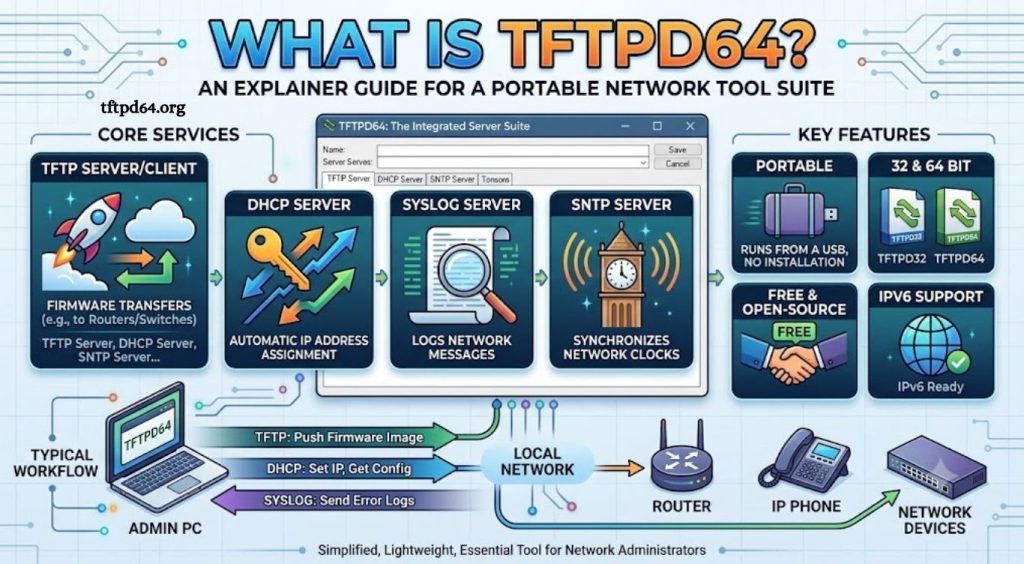
TFTPD64 stands among the most trusted lightweight network utility applications designed for file transfer, network boot, and device configuration. System administrators, network engineers, software developers, and IT professionals frequently rely on this tool because it combines several essential networking services within one compact application. Simple installation, efficient performance, and broad compatibility have made TFTPD64 a preferred solution for network testing, firmware deployment, operating system installation, and embedded device management.
Modern networks demand reliable utilities capable of simplifying complex administrative tasks without unnecessary overhead. TFTPD64 fulfills that requirement by offering multiple networking services through a clean interface suitable for beginners and experienced professionals alike. Whether the objective involves transferring firmware, configuring routers, deploying operating systems through PXE boot, or testing network communication, TFTPD64 provides practical functionality that improves efficiency while reducing deployment time.
Understanding TFTPD64
TFTPD64 represents a free Windows-based networking application developed for managing several essential network services from one interface. Despite the name emphasizing the Trivial File Transfer Protocol (TFTP), the software includes additional services such as DHCP, DNS, SNTP, Syslog, and PXE support. This combination transforms TFTPD64 into a comprehensive toolkit rather than a simple file transfer application.
Read More: What is TFTPD64?
Network administrators often choose TFTPD64 because installation requires minimal effort, resource consumption remains low, and configuration stays straightforward. Compatibility across many Windows versions further strengthens its popularity among enterprise environments, educational institutions, laboratories, and home networking enthusiasts.
How TFTPD64 Works
TFTPD64 primarily operates through the Trivial File Transfer Protocol, a lightweight communication protocol created for transferring files across local networks. Unlike FTP, TFTP eliminates authentication and advanced management features, allowing extremely fast communication during network boot processes and firmware transfers.
When a client device requests a file, TFTPD64 receives the request, locates the required file within the configured directory, and transfers data through UDP communication. Because of this simplified design, network devices can download firmware images, configuration files, operating system installers, and recovery packages quickly without unnecessary processing overhead.
Main Features of TFTPD64
TFTPD64 delivers much more than basic file transfer functionality. Integrated DHCP service automatically assigns IP addresses during PXE boot operations, while DNS capabilities assist basic name resolution within testing environments. Syslog support collects diagnostic messages generated by network devices, helping administrators monitor activity and troubleshoot problems efficiently.
SNTP functionality synchronizes system clocks across connected devices, maintaining consistent timestamps for logging and monitoring. Built-in PXE support simplifies remote operating system installation without requiring physical installation media. Combined functionality reduces software dependency while improving workflow across network administration tasks.
Common Uses of TFTPD64
Organizations frequently use TFTPD64 for firmware upgrades involving routers, switches, firewalls, IP cameras, printers, and embedded hardware. Many network vendors recommend TFTP-based firmware installation because the protocol delivers files quickly across local infrastructure.
Software deployment represents another significant application. IT departments often configure PXE boot environments through TFTPD64, enabling computers to install operating systems directly from network servers. Educational institutions, corporate environments, and technical laboratories benefit from centralized deployment because maintenance becomes faster and more consistent.
Developers working with embedded systems also depend on TFTPD64 during hardware testing. Bootloaders commonly retrieve firmware images through TFTP before initializing operating systems, making the software valuable throughout product development and quality assurance.
Advantages of TFTPD64
TFTPD64 provides excellent performance without demanding powerful hardware. Lightweight architecture ensures smooth operation even on older Windows systems. Fast file transfer capability improves deployment speed, particularly during firmware installation and operating system imaging.
Multiple integrated networking services eliminate separate utility installation, simplifying administrative workflows. Straightforward configuration reduces learning time, allowing newcomers to begin using essential features without extensive documentation.
Open availability further increases accessibility because organizations, educational institutions, and independent professionals can deploy the software without licensing costs.
Limitations of TFTPD64
Although TFTPD64 offers impressive functionality, several limitations deserve consideration. TFTP communication lacks built-in encryption and authentication, making the protocol unsuitable for transferring confidential information across untrusted networks. Secure alternatives such as SFTP or SCP remain better choices whenever sensitive data requires protection.
Performance also depends on reliable local network connectivity. Packet loss, unstable connections, or firewall restrictions may interrupt transfers. Proper network configuration significantly improves operational stability during large deployment tasks.
Security Considerations
Safe deployment requires careful network planning. Administrators should restrict TFTPD64 usage to trusted local environments whenever possible. Firewall rules, isolated management networks, and controlled user access help reduce unnecessary exposure.
Regular software updates, secure configuration practices, and proper monitoring further strengthen operational security. Combining these measures with network segmentation creates a safer environment for firmware deployment and system maintenance.
Why TFTPD64 Remains Popular
TFTPD64 continues attracting widespread adoption because practicality outweighs complexity. Network professionals appreciate software capable of handling several administrative services through one interface while maintaining exceptional speed and low resource consumption.
Broad compatibility with routers, switches, embedded devices, virtual machines, and physical servers ensures ongoing relevance across many technical environments. Continuous reliability has established TFTPD64 as a dependable solution for network deployment, maintenance, troubleshooting, and educational training.
Conclusion
TFTPD64 remains a valuable networking utility that combines TFTP, DHCP, DNS, SNTP, Syslog, and PXE functionality within one lightweight Windows application. Reliable performance, straightforward configuration, and efficient file transfer capabilities make the software suitable for firmware deployment, operating system installation, embedded development, and network administration.