
TFTPD32 and TFTPD64 are popular lightweight network utility tools used for managing file transfers and network services. Both applications are developed by the same creator and provide essential features such as TFTP, DHCP, DNS, and Syslog services. These tools are commonly used by network administrators, IT professionals, and developers for device configuration, firmware updates, and troubleshooting network environments.
Although TFTPD32 and TFTPD64 offer similar functionality, the main difference between them is based on system compatibility and architecture support. Understanding the difference between TFTPD32 and TFTPD64 helps users choose the right version according to their operating system, network requirements, and performance expectations.
Understanding TFTPD32
TFTPD32 is a compact network server application designed mainly for 32-bit Windows operating systems. It provides multiple network services within a single portable application, making it useful for small network setups, testing environments, and basic troubleshooting tasks.
The software includes a TFTP server and client, DHCP server, DNS server, Syslog server, and network monitoring features. Because of its simple interface and low resource usage, TFTPD32 became widely used by professionals who needed a quick and reliable solution for transferring files between computers and network devices.
Read More: How to set up PXE boot using TFTPD64?
However, modern computers often use 64-bit operating systems, which limit the long-term compatibility and performance advantages of TFTPD32. While it can still work on many systems, users with newer hardware and operating systems generally prefer the 64-bit version.
Understanding TFTPD64
TFTPD64 is the updated version of TFTPD32 designed specifically for 64-bit Windows operating systems. It provides the same core network services while offering improved compatibility with modern computers and larger system architectures.
The main advantage of TFTPD64 is its ability to work efficiently with current Windows environments. It takes advantage of 64-bit system capabilities, allowing better stability and improved performance when handling network tasks. For organizations managing modern networks, TFTPD64 is usually the recommended choice because most current computers operate on 64-bit platforms.
TFTPD64 maintains the same user-friendly design as TFTPD32, allowing users familiar with the older version to transition easily without learning a completely different application.
Key Difference Between TFTPD32 and TFTPD64
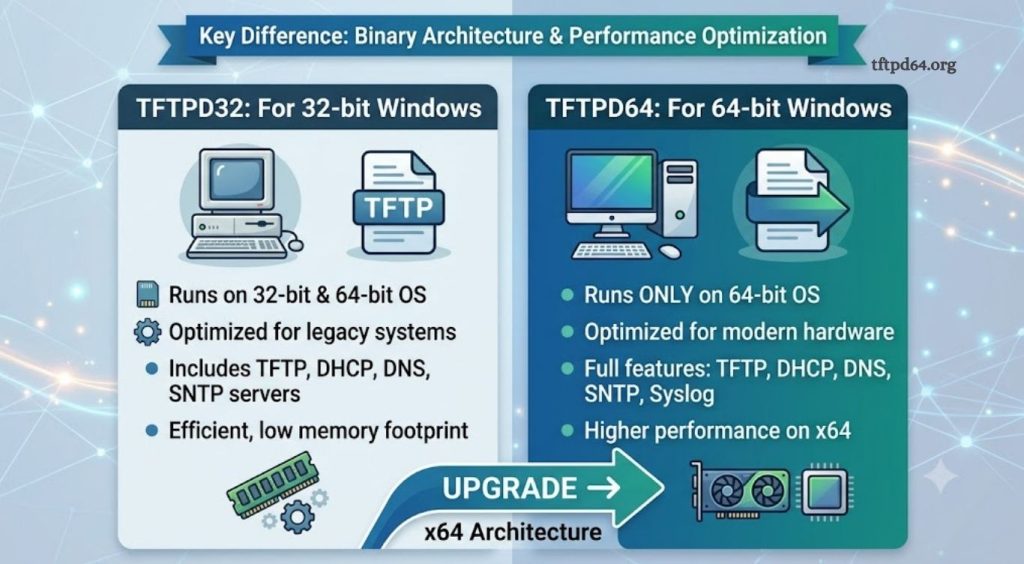
The primary difference between TFTPD32 and TFTPD64 is the operating system architecture they support. TFTPD32 is built for 32-bit Windows systems, while TFTPD64 is developed for 64-bit Windows systems. Both applications provide similar networking features, but TFTPD64 offers better compatibility with newer hardware and modern operating systems.
Another difference is performance optimization. TFTPD64 is designed to work more efficiently on 64-bit systems, which can provide better resource management and smoother operation during network activities. TFTPD32 remains useful for older computers or environments that require a 32-bit application.
The choice between the two depends mainly on the Windows version being used. Users running a 64-bit operating system should select TFTPD64, while those working with older 32-bit systems may continue using TFTPD32.
Features Shared by TFTPD32 and TFTPD64
Both versions include essential network management features that make them valuable tools for IT professionals. They support TFTP file transfers, allowing users to upload and download configuration files, firmware images, and other important data between network devices and computers.
Both applications also include DHCP services that can automatically assign IP addresses to devices connected to a network. Their DNS and Syslog capabilities help with network monitoring, troubleshooting, and device management, making them practical solutions for testing and maintenance tasks.
The interface remains simple in both versions, allowing beginners and experienced administrators to perform network operations without complex configuration steps.
Which Version Should You Use?
For most users today, TFTPD64 is the better option because modern Windows computers usually run on 64-bit architecture. It provides improved compatibility, better performance, and continued support for current systems.
TFTPD32 is still a suitable choice when working with older computers or specific environments that require a 32-bit application. Organizations maintaining legacy hardware may continue using TFTPD32 without issues.
Before choosing a version, users should check their Windows system type. Selecting the correct version ensures better reliability and avoids compatibility problems during network operations.
Conclusion
TFTPD32 and TFTPD64 are powerful network utility tools that provide similar services for file transfers, network configuration, and system management. The main difference between them is the architecture they support, with TFTPD32 designed for 32-bit Windows systems and TFTPD64 optimized for 64-bit Windows systems.